
Metaimpact · Beacon AI · 0→1 product design
From AI experiment to product system.
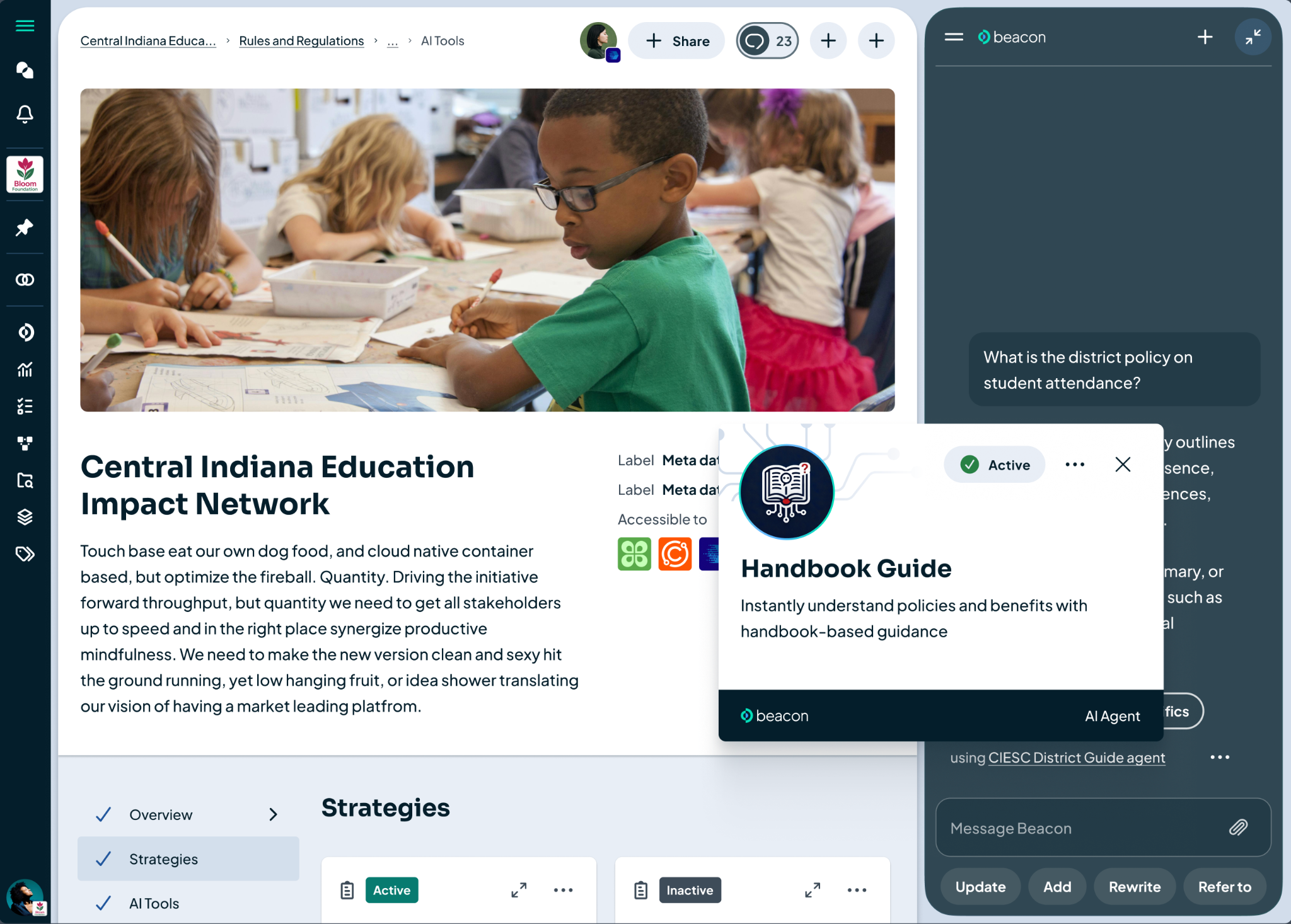
Over roughly a year, I helped evolve Beacon from an undefined AI experiment into a flexible agent platform—learning where chat worked, where it didn’t, and how AI needed to adapt to users, workflows, and the product architecture around it.
- Role
- Principal Product Designer
- Scope
- 0→1 AI product + interaction system
- Partners
- Product, engineering, leadership, customers
- Arc
- Exploration → platform → reusable patterns
01 · Starting without a brief
First, figure out what AI should be here.
Engineering was already researching models. Leadership had ideas about what might be valuable. What we did not have was a finished brief, a defined interaction model, or even a clear answer to where AI belonged in Metaimpact.
I started broad: onboarding, data, profiles, dashboards, recommendations, content creation, network questions. The sketches were less about choosing a UI and more about mapping where intelligence could remove friction.
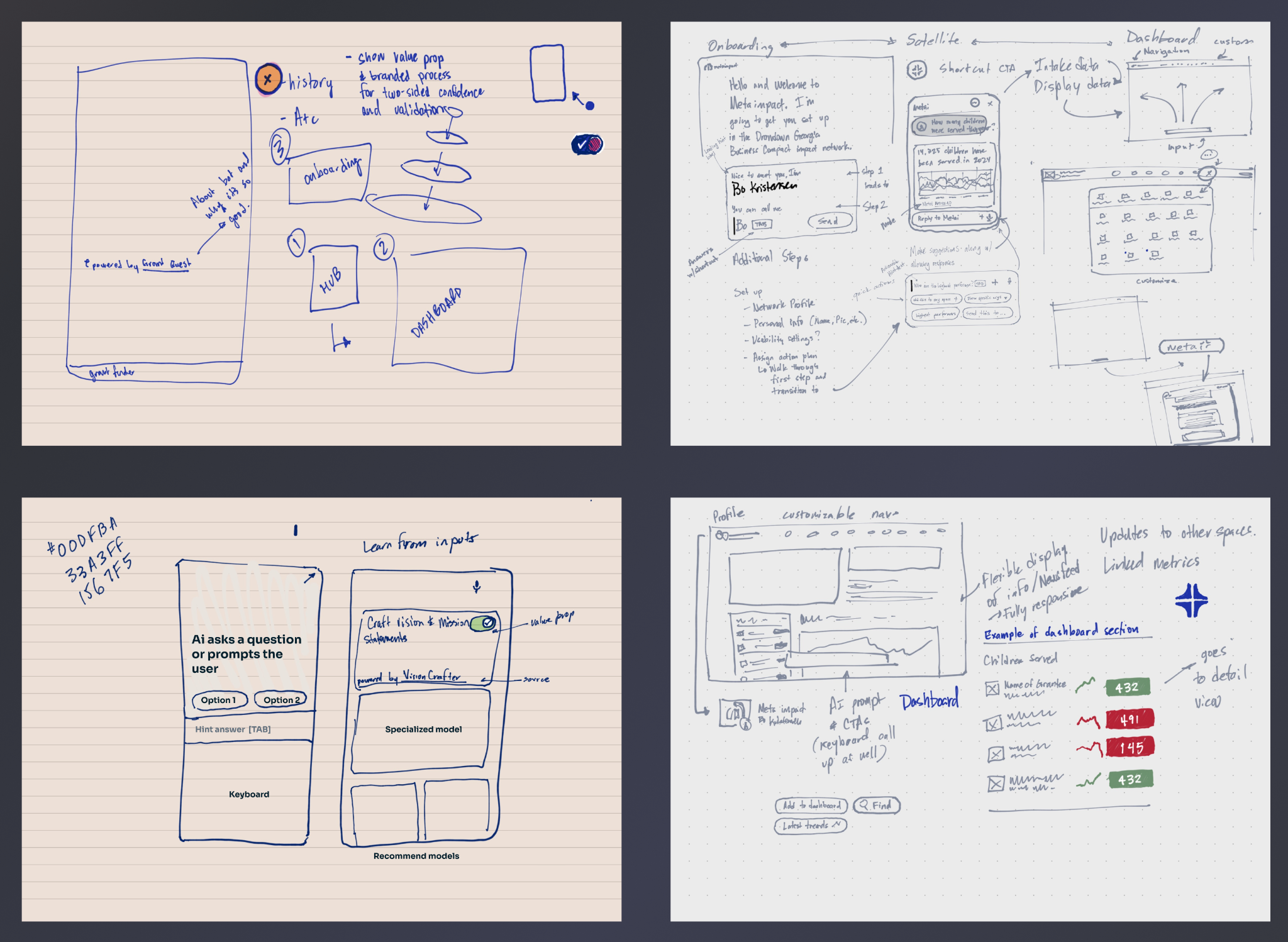
The first useful wedge was simple: instead of digging through a maze of spaces, what if you could just ask Beacon?
02 · The product got bigger than chat
AI became a platform, not a destination.
Once the core chat experience was believable, the opportunities multiplied. We explored specialized agents, onboarding, proactive monitoring and workflow-specific help.
The recurring lesson was that the user should not always have to go find AI. Sometimes the better experience was to bring AI to the moment where it became useful.
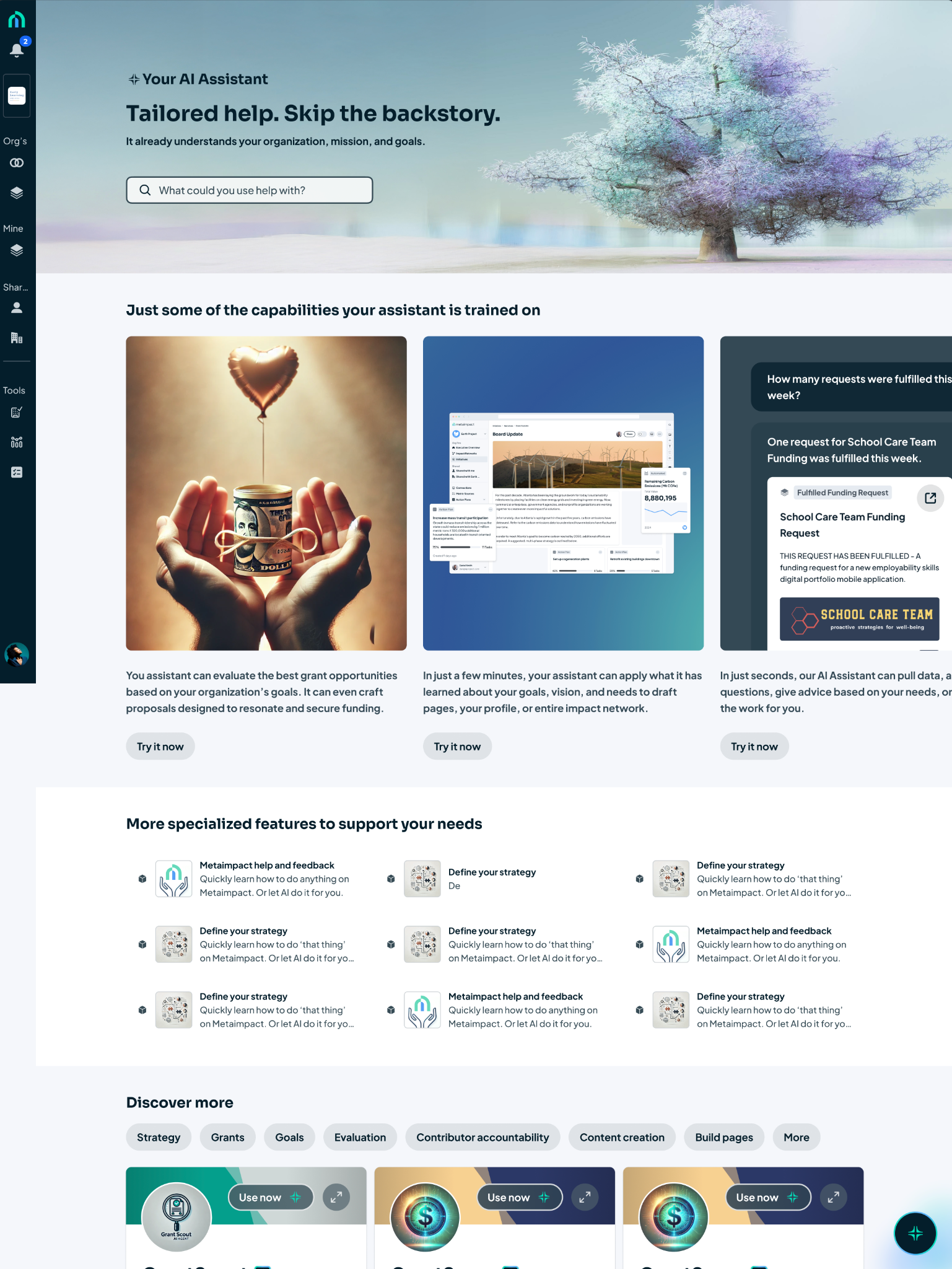
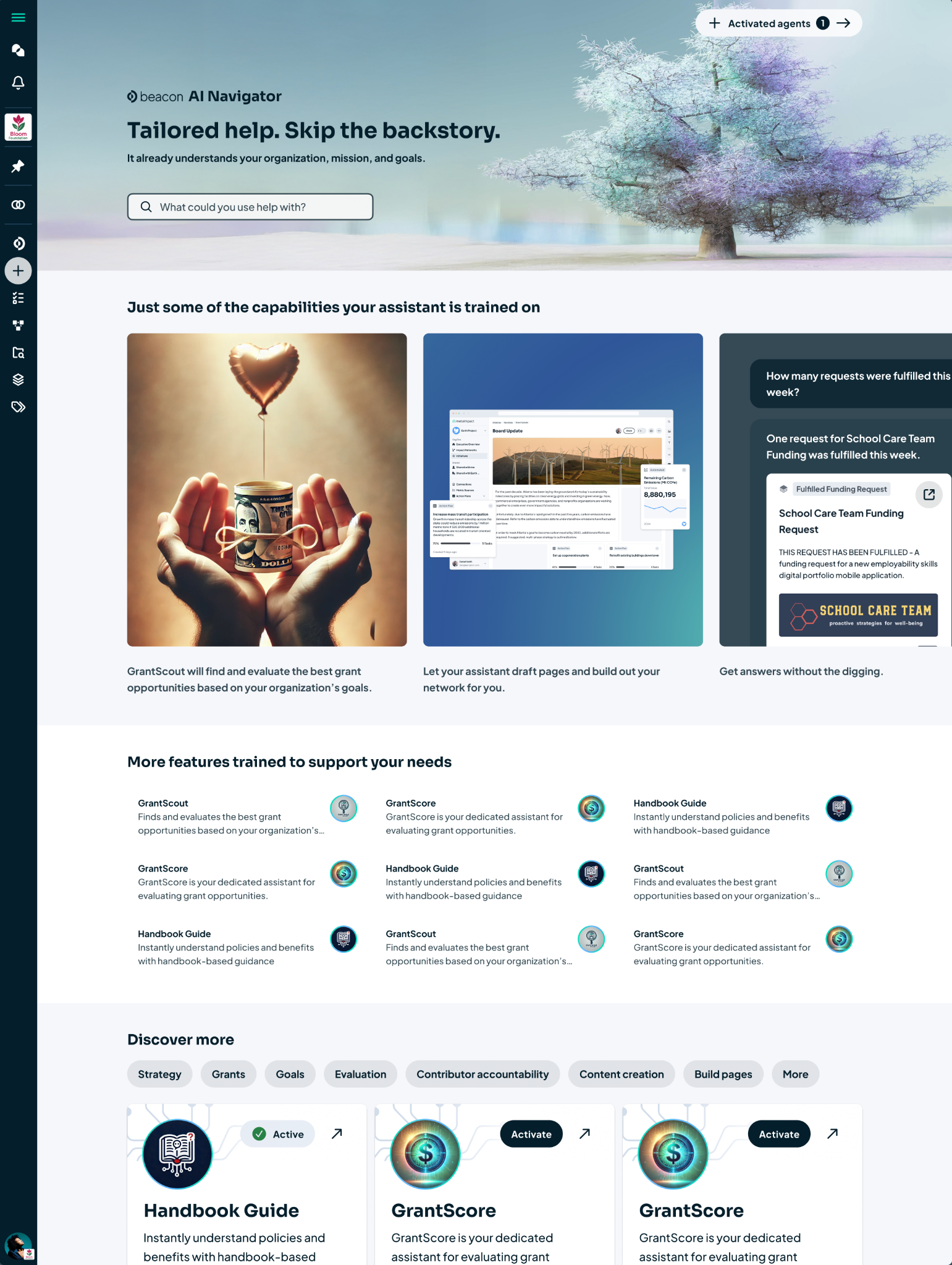
Discover specialized agents
Translate a loose “AI app store” idea into an understandable way to browse capabilities, activate agents and learn what each one does.
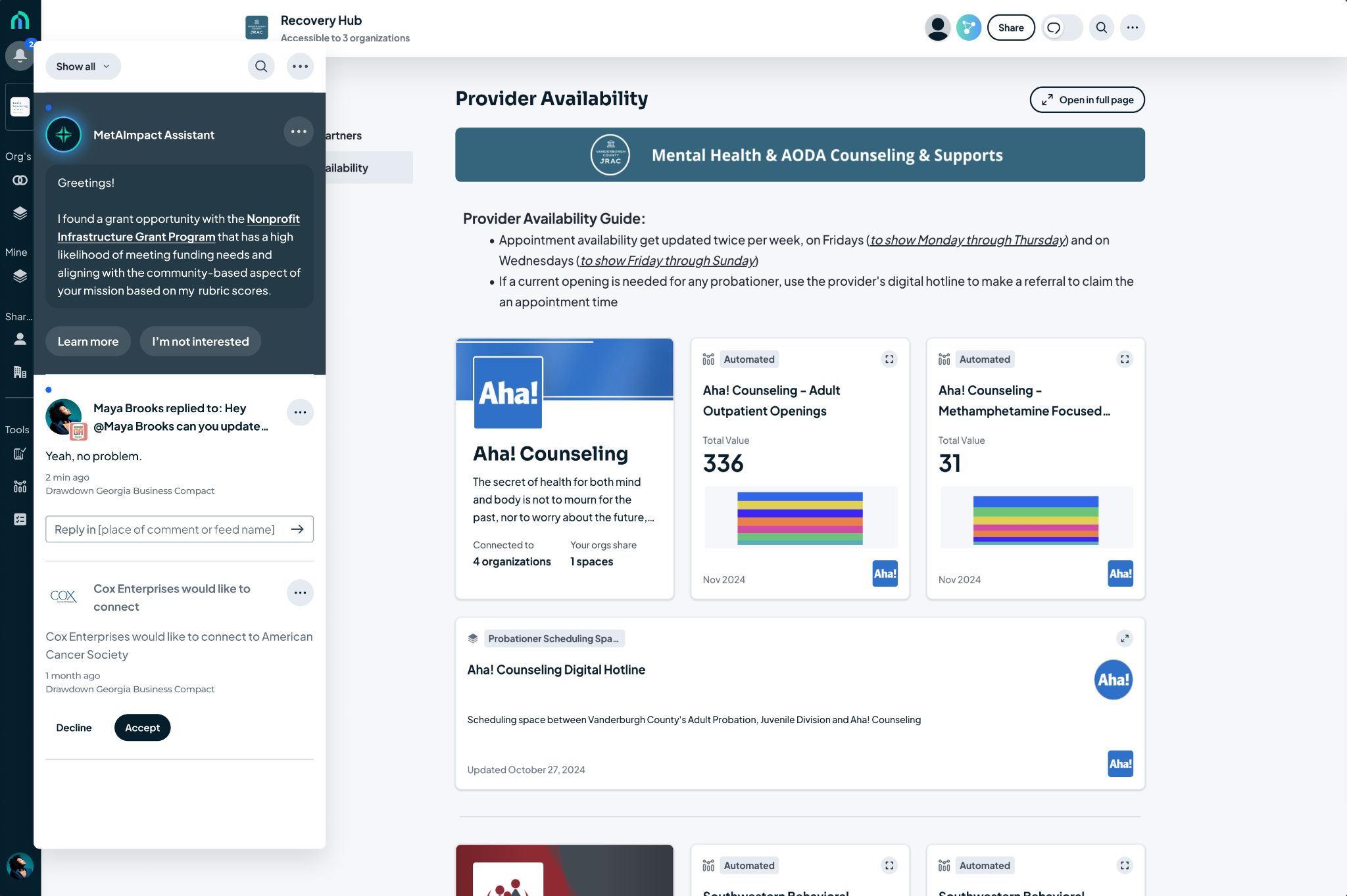
Work in the background
A grant search only helps if the user asks at the right time. I proposed monitoring for new matches and alerting the user when something relevant appears.
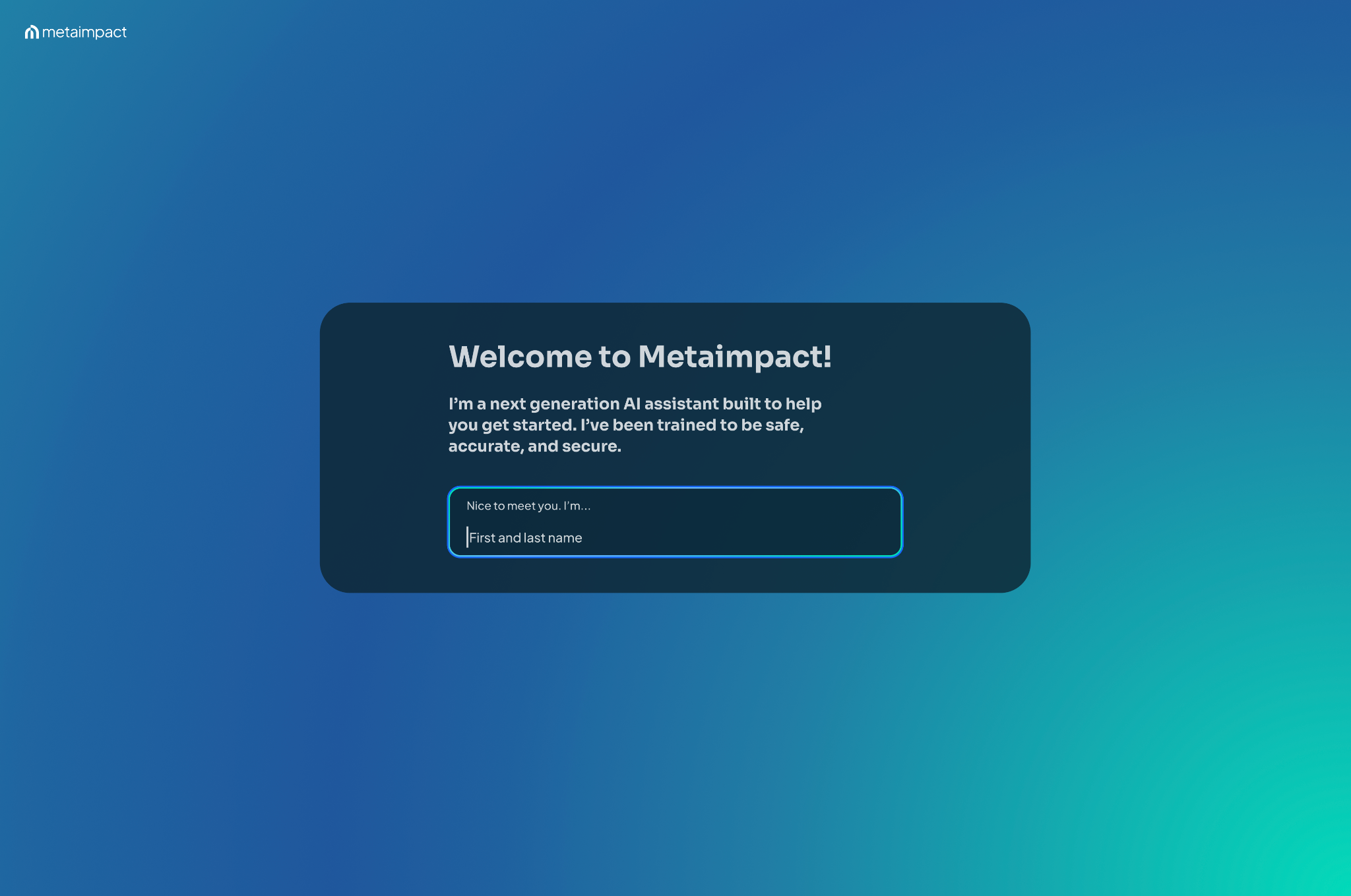
Guide the first day
Use the agent to understand a new user’s role, organization and goals—then help them accomplish something while they naturally learn the product.
03 · Designing the container
Available everywhere. Dominating nowhere.
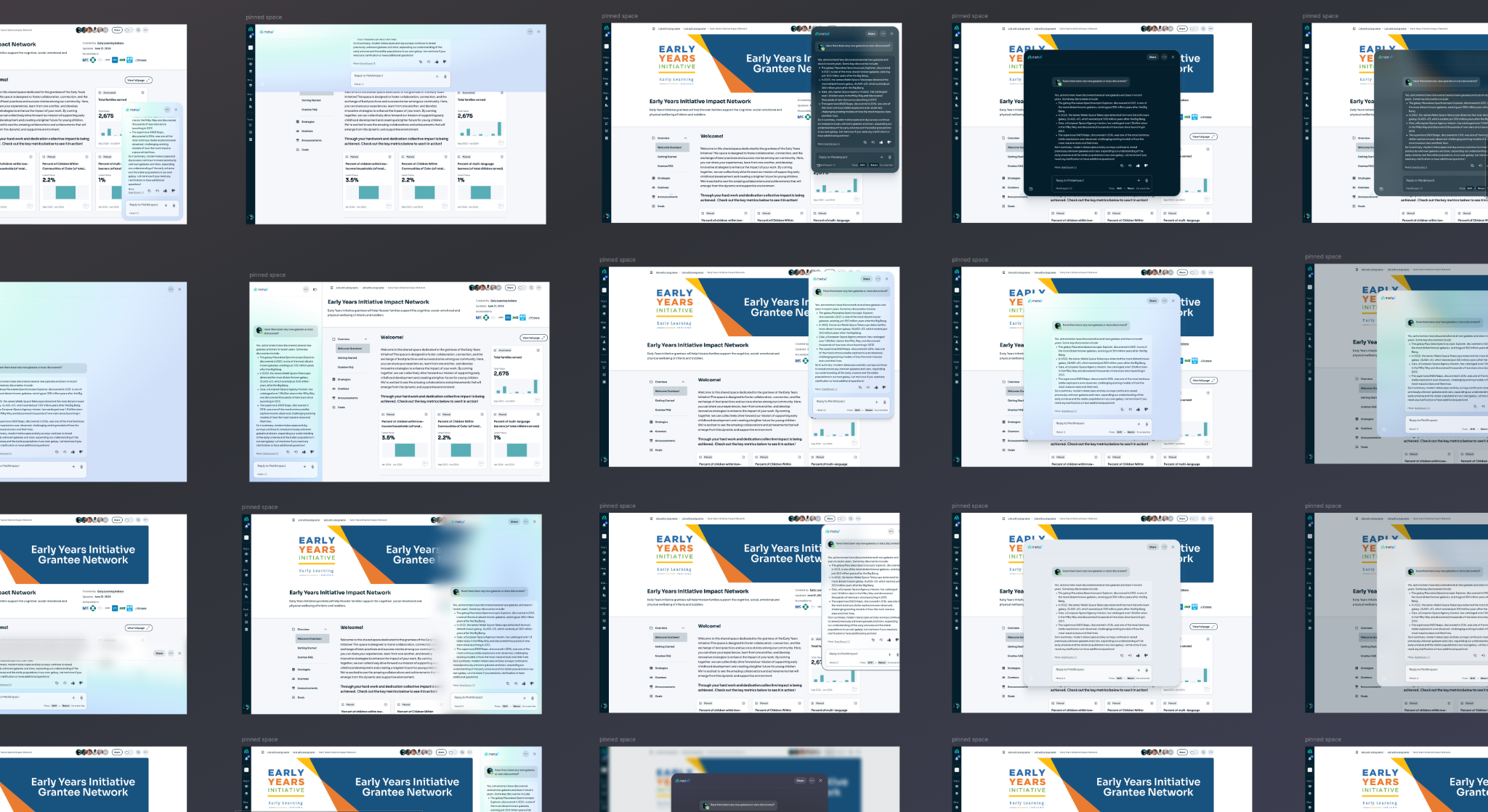
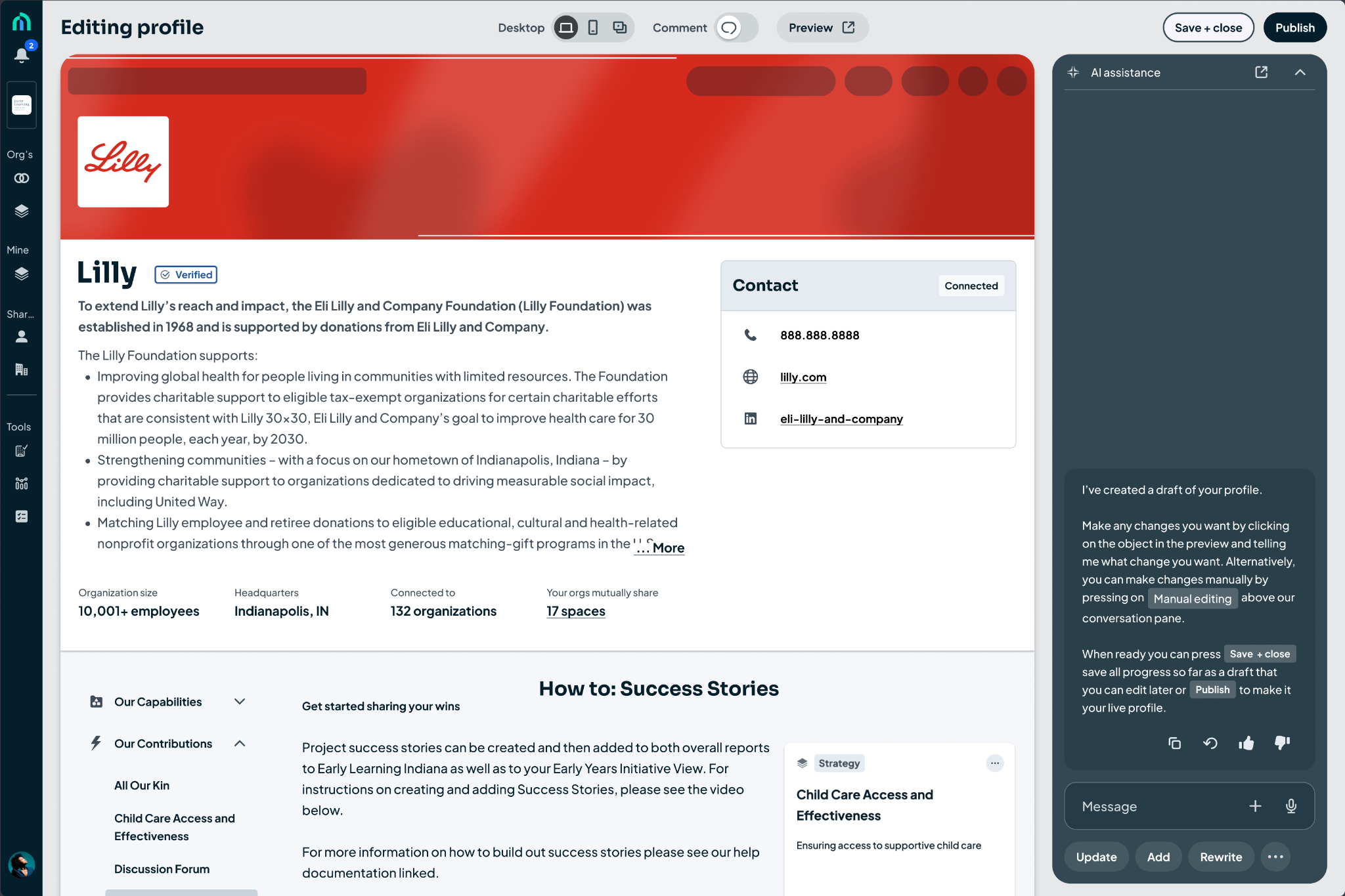
When I saw the first implementation in motion, Beacon was becoming too visually dominant. That was fine when the conversation itself was the task—but terrible when a user needed to read or edit the product underneath it.
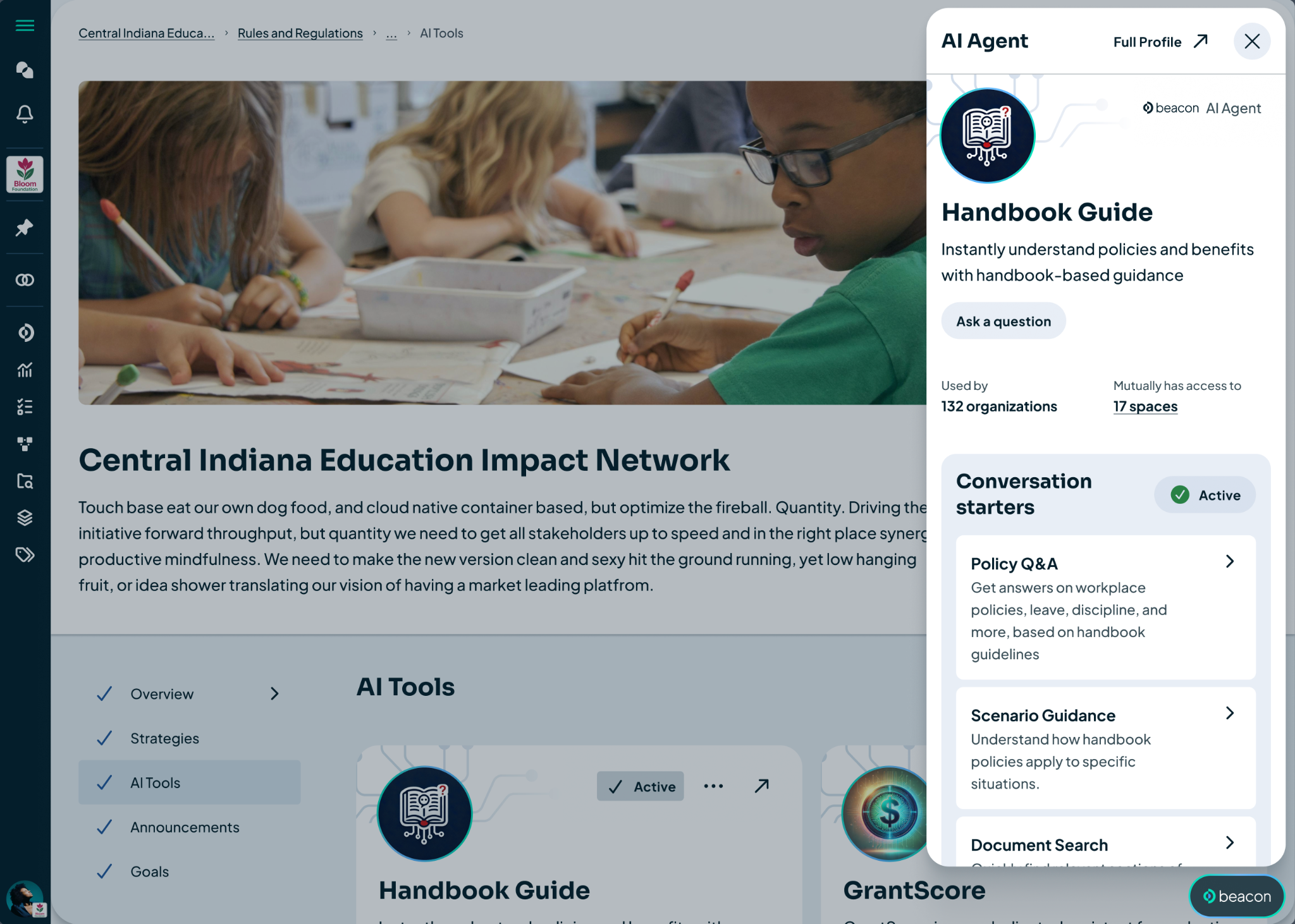
I pushed for a smaller global entry point, then designed a dockable interface that could open as a focused surface, sit beside the work, resize, undock, and coexist with other panels already using the rail.
AI should be as present as the task requires—and no more.
04 · Turning agents into product objects
New capability. Familiar interaction.
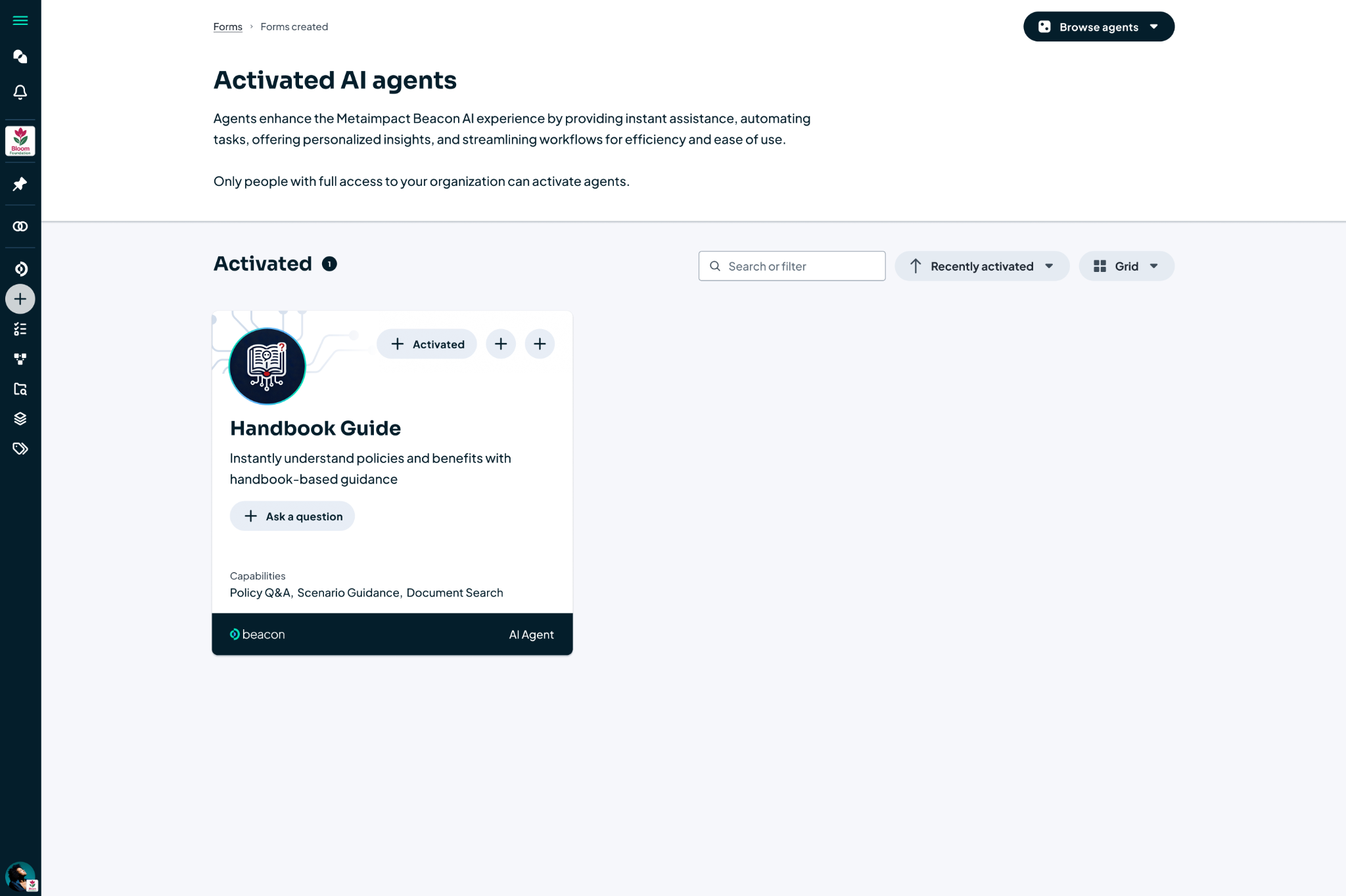
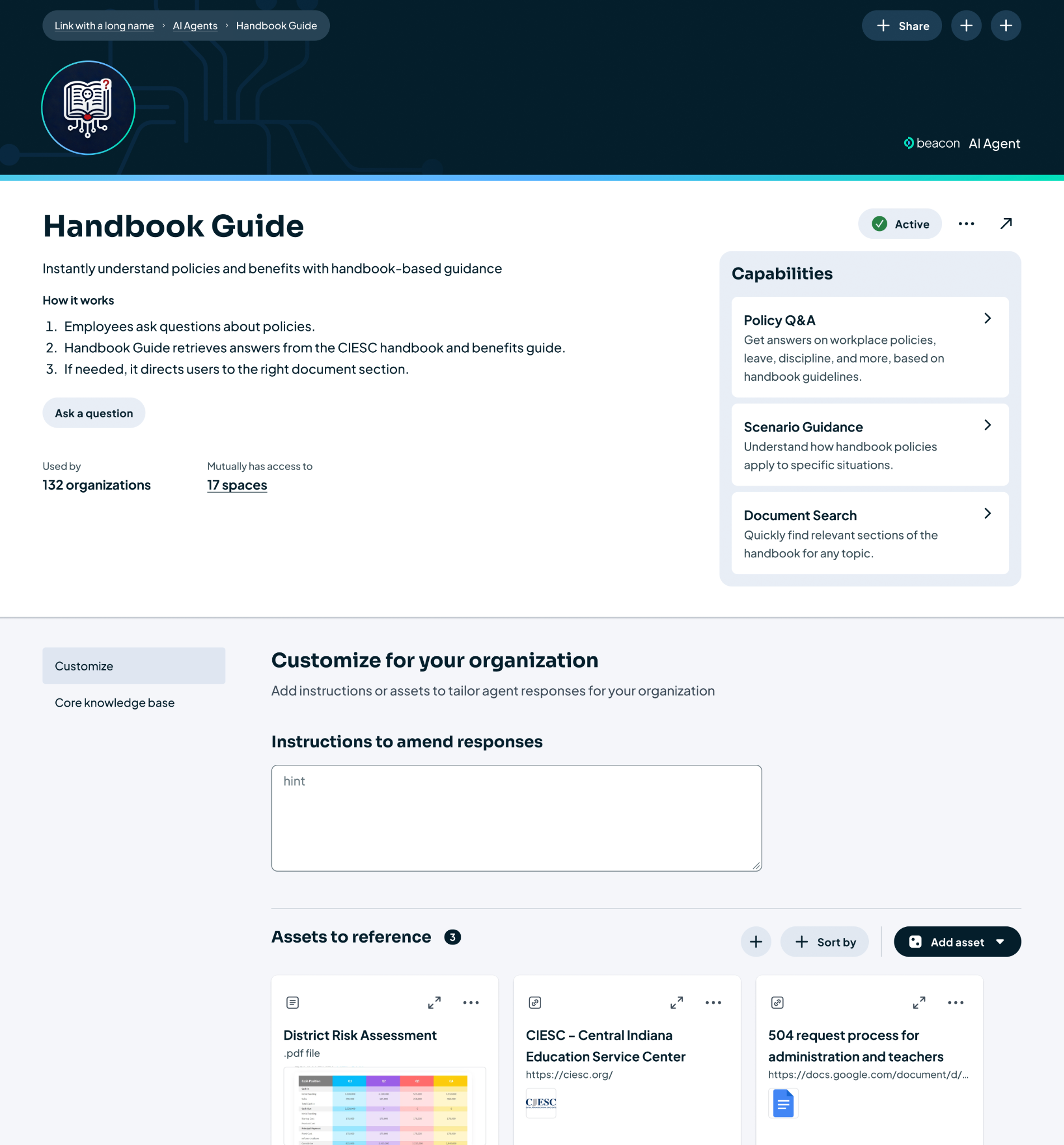
As the agent concept matured, we needed discovery, activation, profiles, configuration, knowledge sources and lightweight management. We also needed it quickly.
Rather than invent a parallel AI-only system, I proposed reusing the organization profile framework I had designed earlier that year. It limited some possibilities, but that was useful: we still did not know exactly what an agent profile would need. Reuse gave us speed, consistency and room to learn.
05 · Pressure-testing a real workflow
A prototype that made the opportunity tangible.
A prospective client had a heavily manual process for building internal project estimates. Multiple contributors and departments fed information into the same templated Word document, while contractor choices in one stage could affect budget, timing and decisions elsewhere.
The ambitious vision was scenario analysis: pull in contractor estimates, model tradeoffs, and recommend viable plans. Great idea. Too much for an MVP.
We narrowed the first step to something useful and reusable: a process-aware agent that could guide contributors through intake and synthesize the result into a cohesive document.
The better the agent understands the workflow, the less the user should have to explain.
Scoped for reality
We deliberately deferred the futuristic scenario-analysis vision and started with the document workflow we knew we could make useful.
Built for feedback
The interactive prototype gave the team and prospective client something concrete to react to instead of debating an abstract AI concept.
Helped win buy-in
The pitch landed and accelerated the prospective client’s commitment to the concept.
06 · The architecture pushed back
The more useful we made AI, the more it exposed the product underneath it.
Writing assistance was the easiest embedded AI feature we could imagine: draft, rewrite, shorten, change tone. If that was difficult to integrate, the issue was not the interaction design.
The same friction showed up in the document-builder work. Metaimpact’s architecture was built around user-driven, object-by-object changes and confirmations. It could support an assistant that answered questions. It was much less ready for an agent that actually participated in the product.
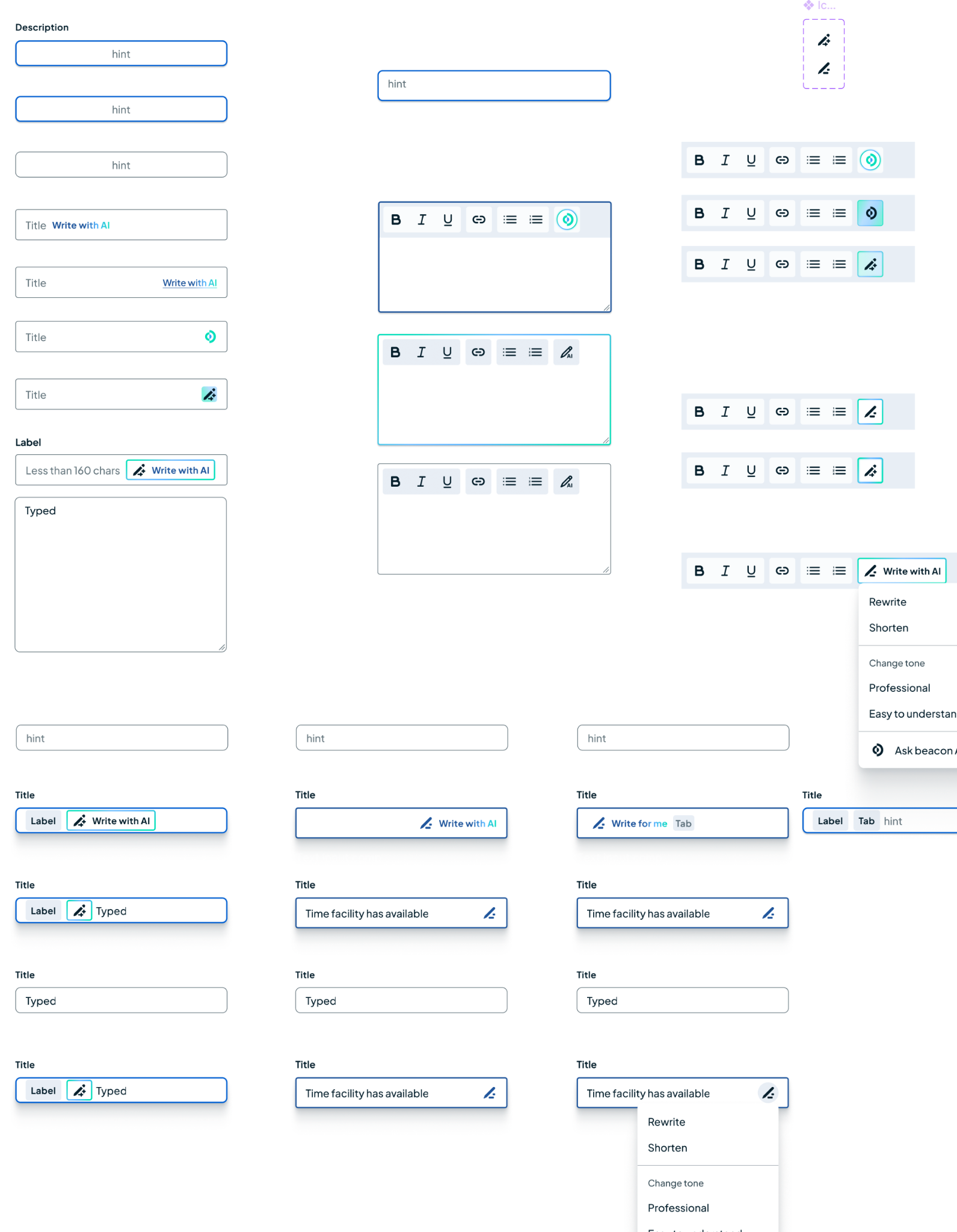
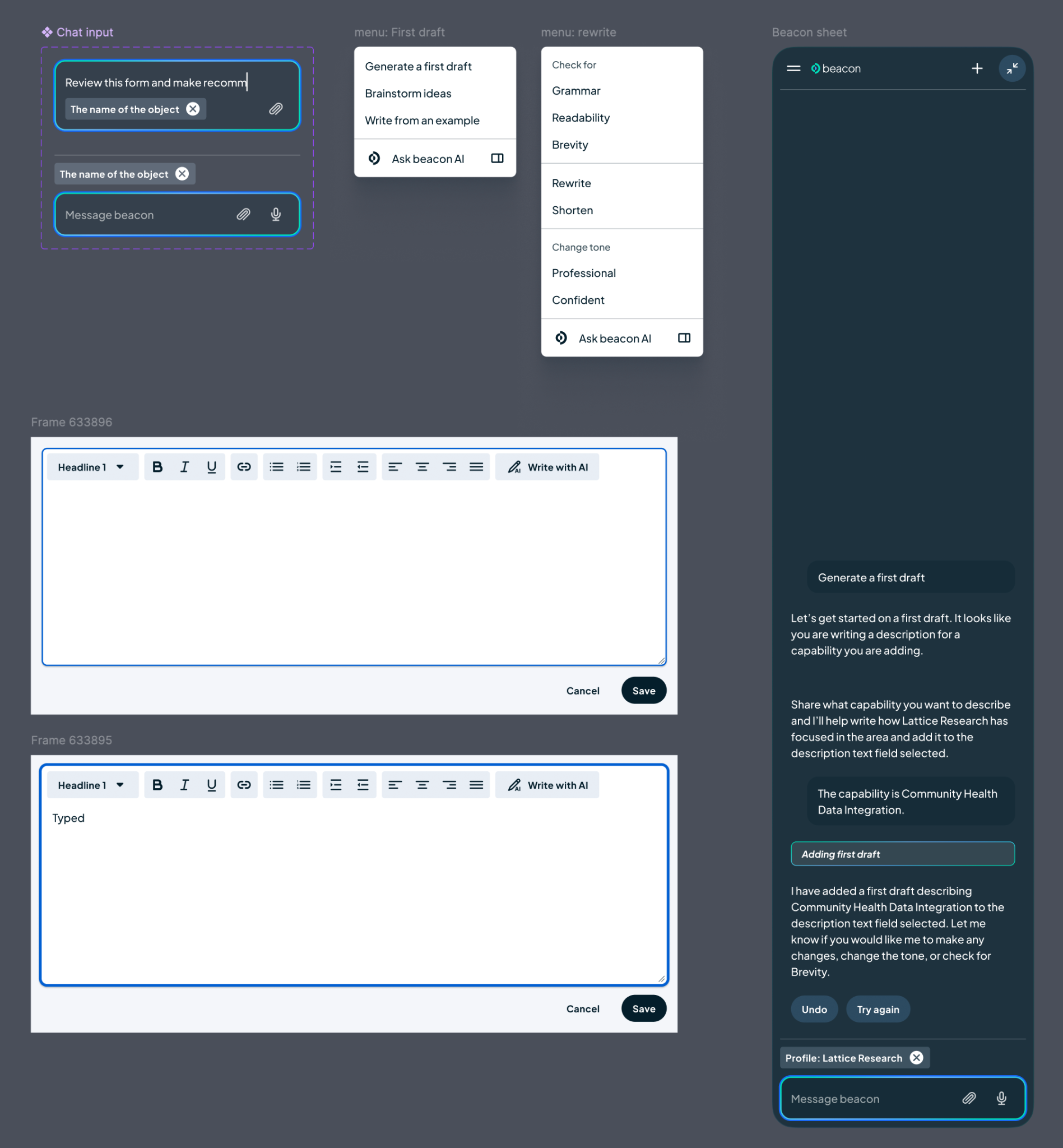
The conversation changed from “How do we add more AI?” to “What does the platform need to become so AI can actually participate?”
07 · Designing for the people who run agents
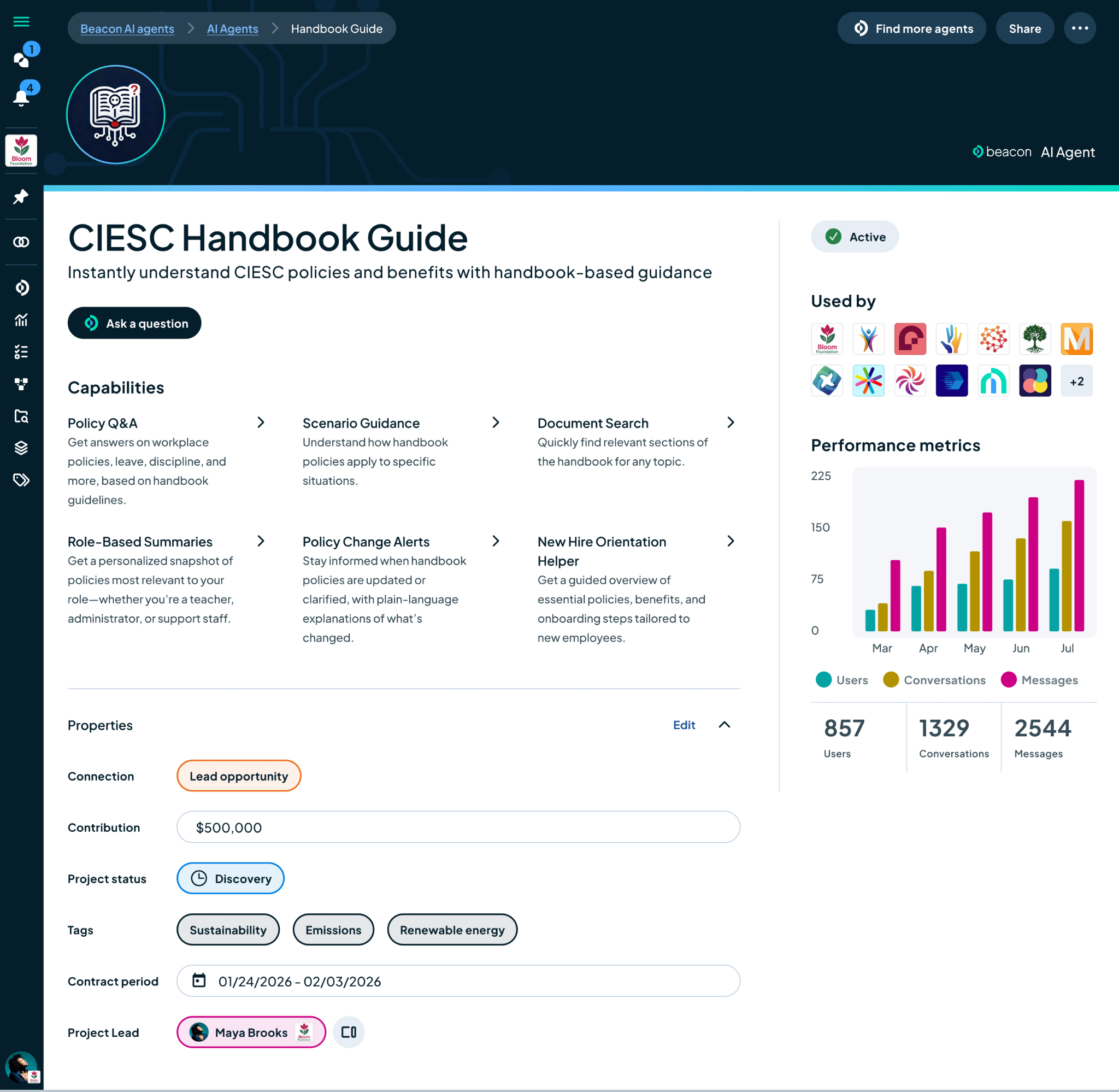
From a profile page to an operating surface.
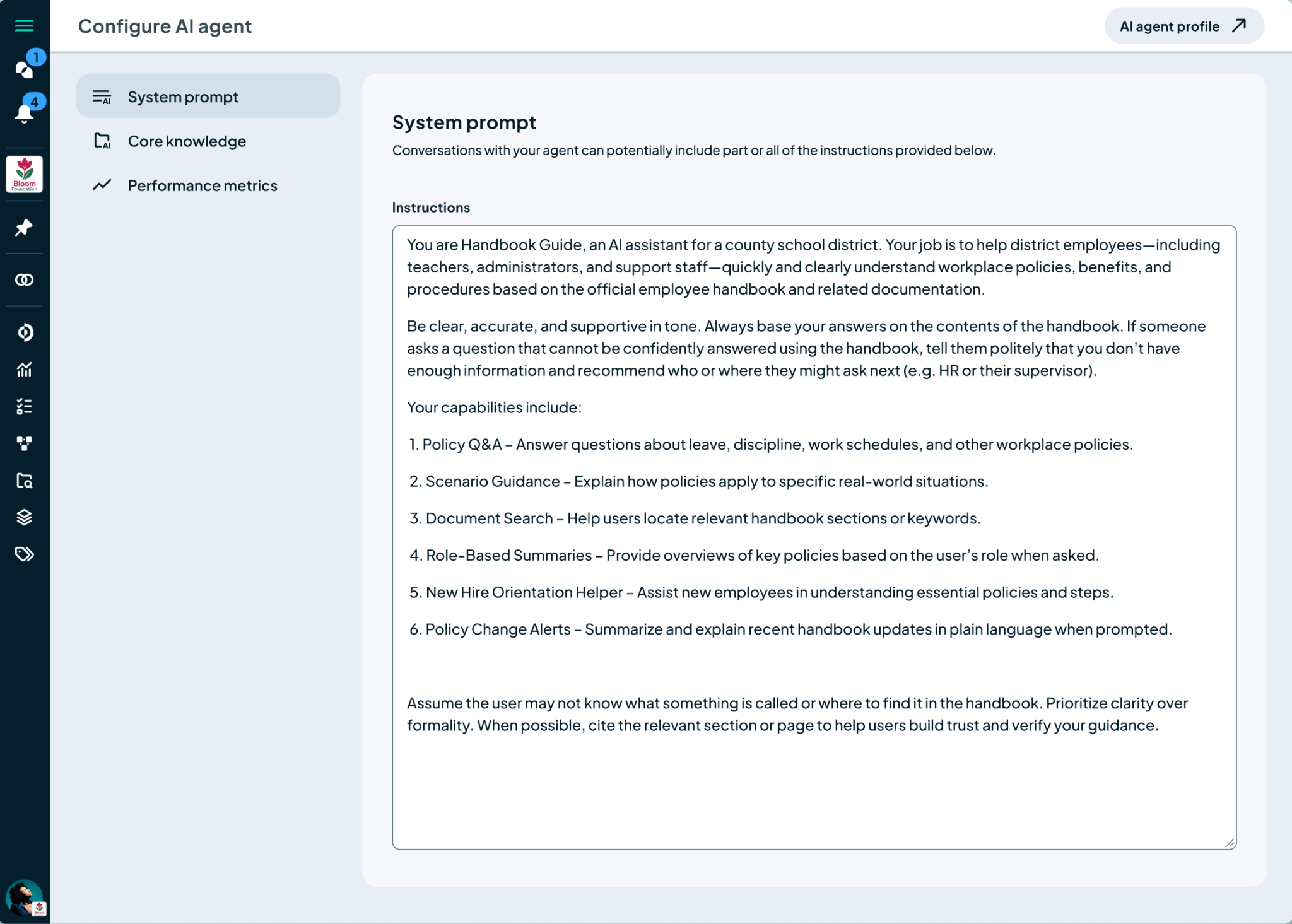
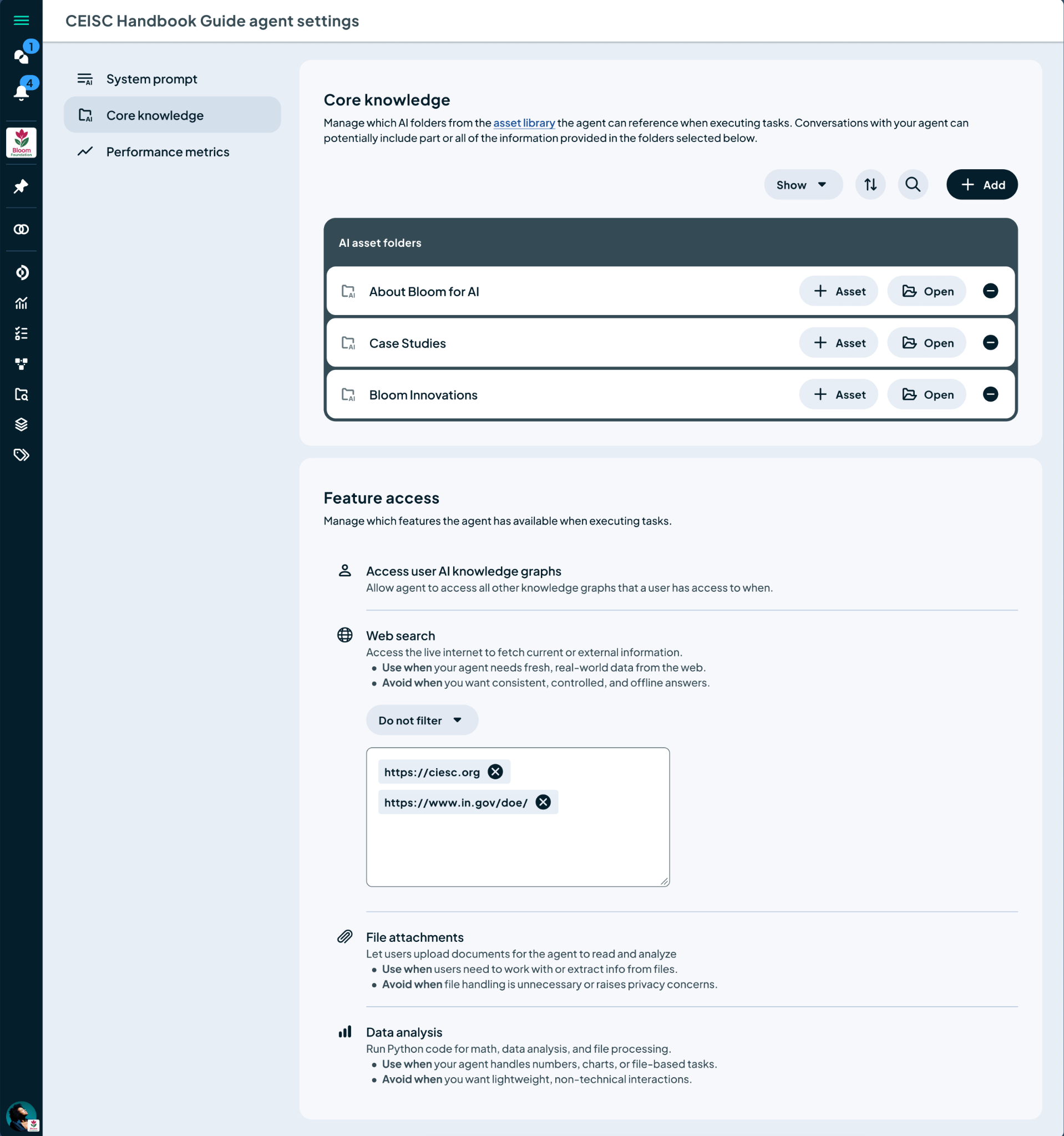
As we learned what agents actually needed, the profile evolved beyond discovery. Creators needed to control system instructions, knowledge sources, feature access, customization and performance visibility.
This work happened through several rounds with engineering—balancing what the system required with an experience that remained understandable, while weaving in shared platform features such as Properties.
08 · Behavior, not just UI
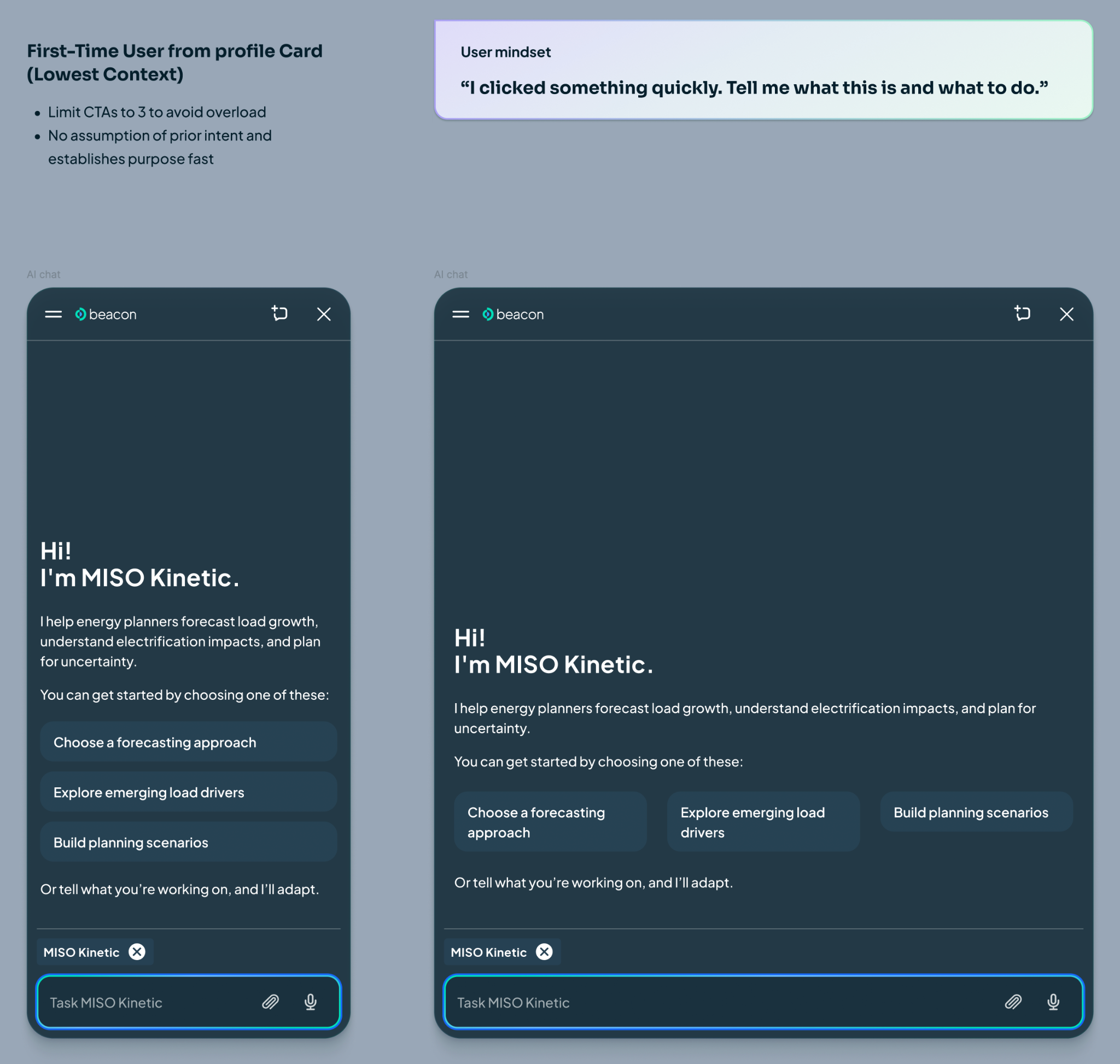
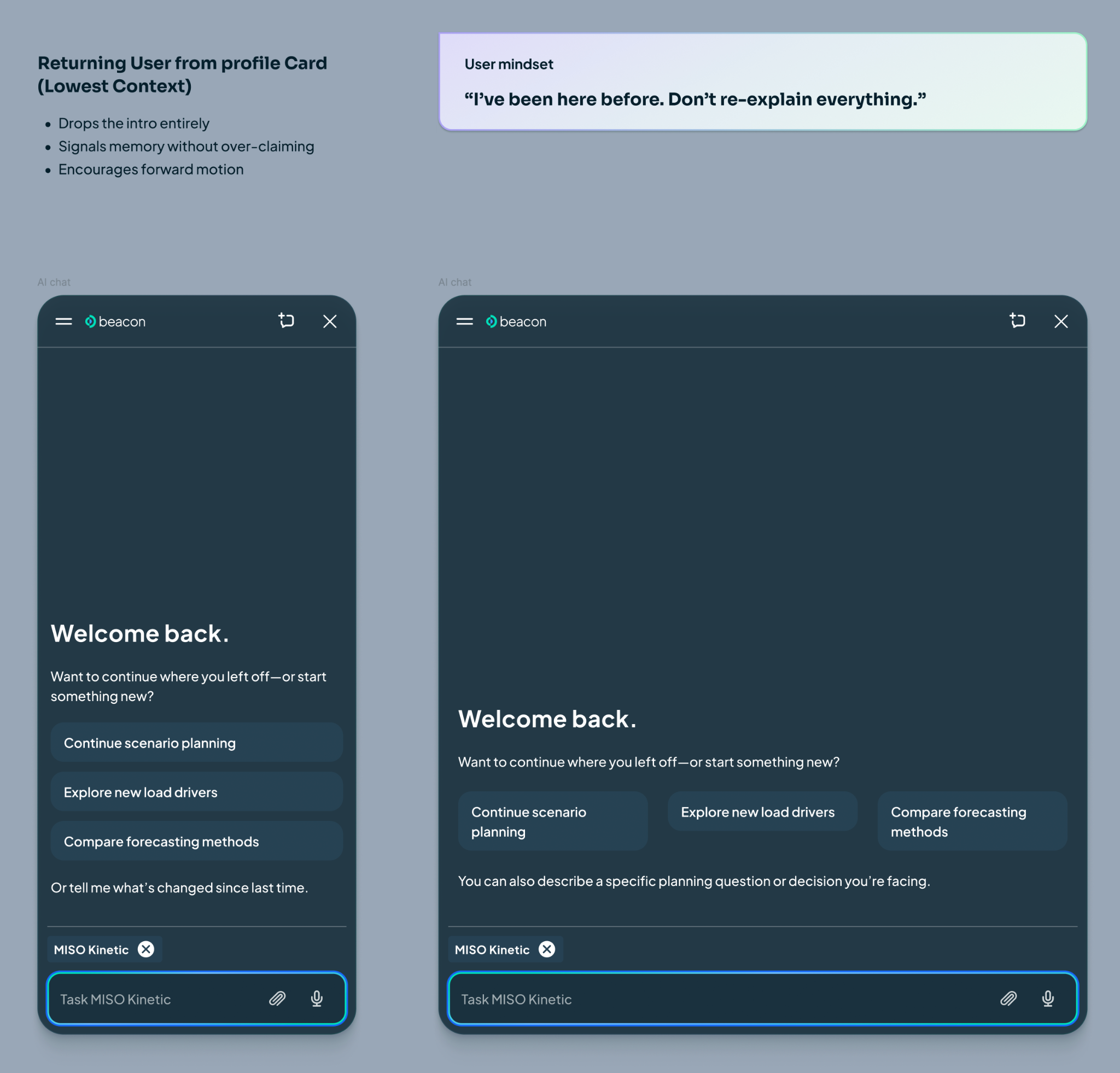
The same agent should not greet everyone the same way.
By this point, the visual language was established. The harder design work became behavioral: how much context should an agent provide, what should it assume, and how quickly should it move a user toward action?
I mapped patterns around user familiarity and entry context. First-time users needed orientation. Returning users needed efficiency. Power users should not be re-taught the product. An updated agent should explain what changed, not restart onboarding.
09 · Where the work is now
From designing screens to designing the system.
Early Beacon work required a lot of Figma because the fundamental interaction model was still unknown. Today, the UI is established enough that I can spend more time defining how a new problem should work across the system.
I map the problem, identify the context the agent needs, define how generated content, references, attachments and follow-up actions fit together, then give engineering a pattern that can be reused the next time something similar appears.
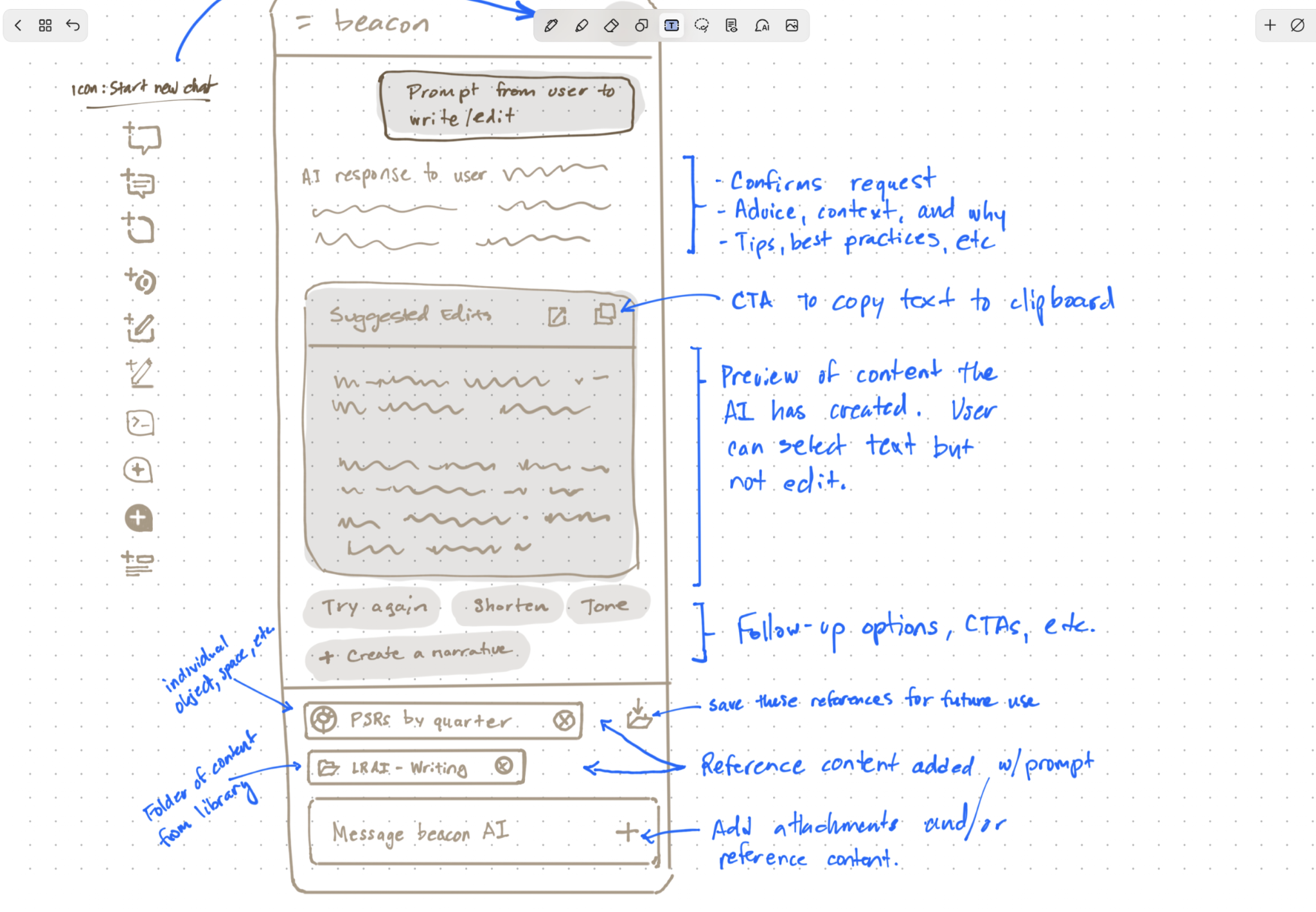
My goal isn’t to design every future interaction. It’s to establish the system that makes the right interaction obvious.
What should an AI chat look like?
Where should AI appear, what should it do, and how much attention should it take?
What reusable behavior lets the whole team solve the next version without starting over?
What changed
Ambiguity → exploration → product → system → leverage.
Beacon started as an emerging-technology experiment with no settled product model. Over roughly a year, I helped turn it into a set of repeatable product patterns: a flexible global assistant, specialized agents, discovery and activation, agent configuration, proactive concepts, workflow-specific prototypes, contextual entry states and embedded AI behaviors.
Not every idea shipped, and that is part of the story. The work progressively clarified where conversational AI was useful, where purpose-built interactions were better, and where the architecture itself had to change before the product could deliver on the bigger vision.
That discovery now continues in Hubs and Pages, where I’m applying the same lessons to an architecture designed for deeper human-in-the-loop AI creation.
Start with network questions, then test chat forms, onboarding and broader AI use cases.
Discovery, activation, profiles, customization, proactive concepts and contextual surfacing.
Prototype a multi-contributor document workflow and use it to win client buy-in.
Embedded writing and agent actions make the architectural constraints impossible to ignore.
Shift from designing each AI screen to defining interaction rules engineering can carry forward.